
Dialysis Access Emergency Procedures Available 24/7
Professional and compassionate consultation and care
from dialysis-specialized nurses and dedicated physicians.
Press the number below to connect directly
to the dialysis access hotline.
The vascular access created for hemodialysis
may develop narrowing or blockage over time.
This can lead to reduced blood flow and decreased dialysis efficiency.
Dialysis Vascular Treatment
Narrowed vessels can be widened using angioplasty (balloon dilation)
or stent placement,
restoring blood flow and maintaining dialysis efficiency.
The Golden Hour Before Complete Access Occlusion
*If the access is completely blocked,
a sudden dialysis emergency can occur.
*In such cases, the procedure may take longer and be more painful,
and major surgery may be required.
*The lifespan of the access may be shortened,
or in severe cases it may no longer be usable.
Dialysis Vascular Treatments
01
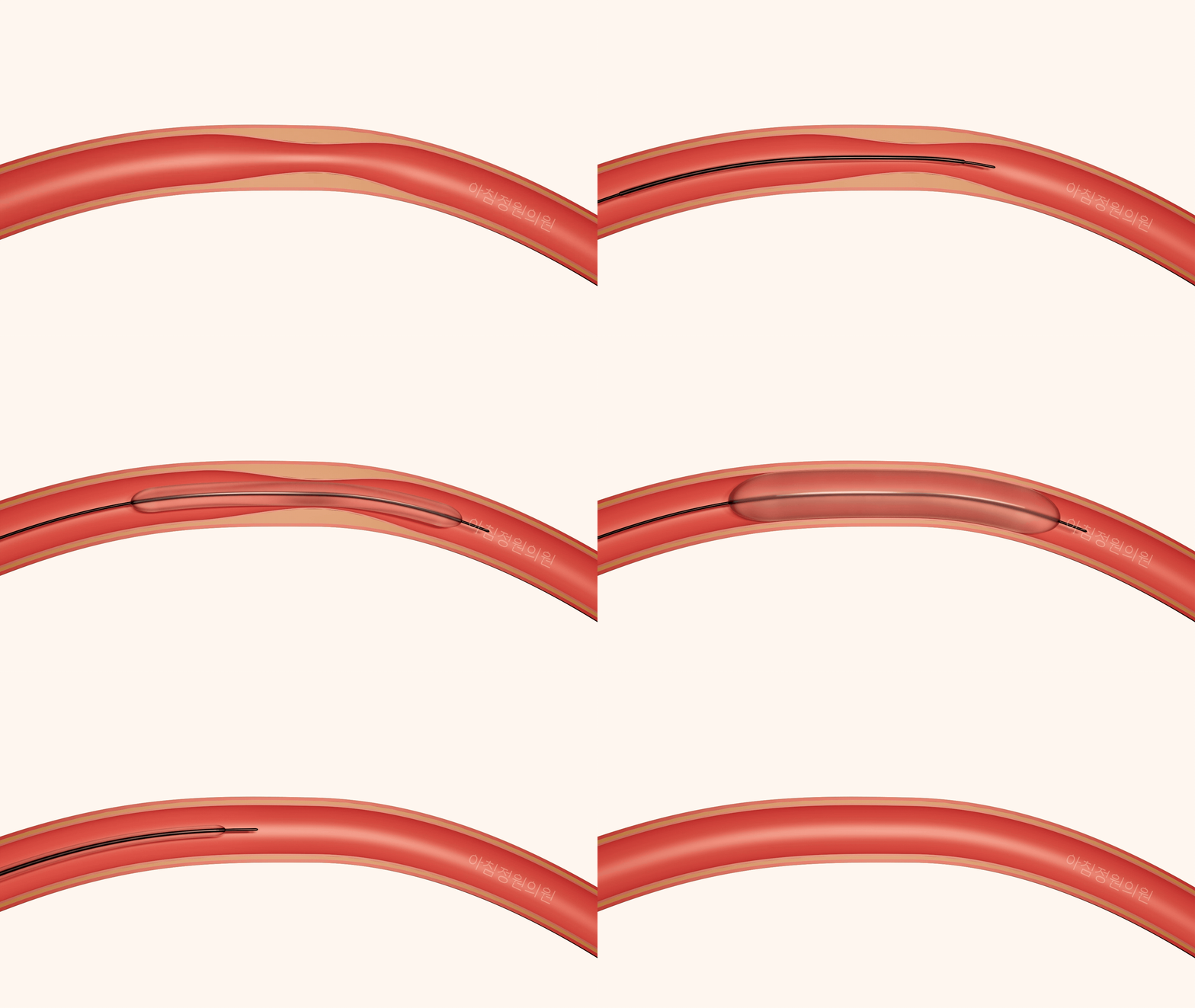
Balloon Angioplasty
A balloon is inflated to widen the narrowed vessel.
The principle is similar to coronary stenting, and the procedure is quick.
Some patients may feel pain at the moment of expansion.
02
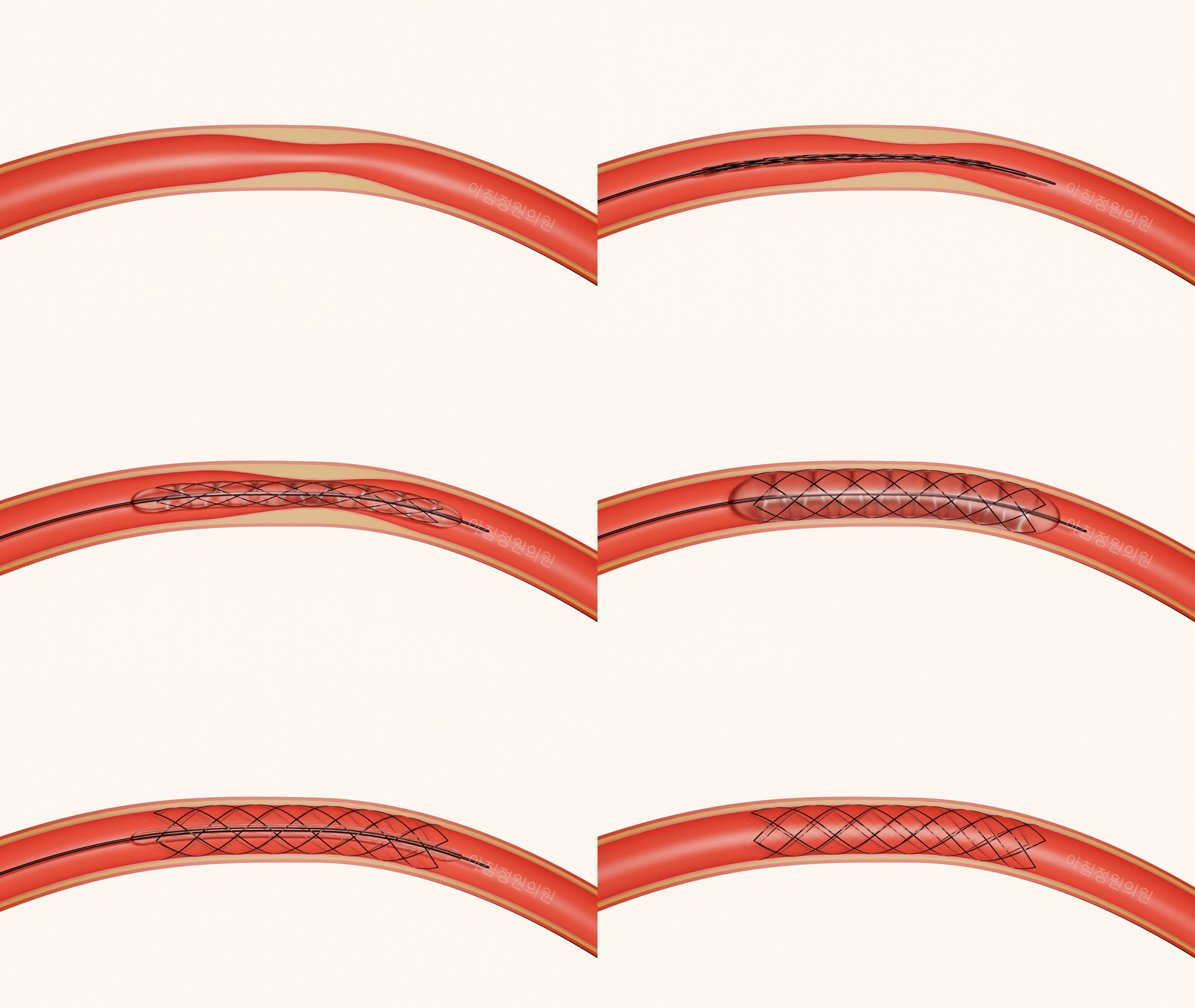
Stent Placement
A metal mesh tube (stent) is permanently expanded at the narrowed site to keep the vessel open.
It is considered when balloon angioplasty alone is insufficient or when restenosis/elastic recoil recurs.
Performed under local anesthesia with mild pain, but regular follow-up is required after the procedure.
03
Thrombectomy
A blood clot blocking the vessel is quickly removed with special equipment to restore blood flow.
It is performed without incision, reducing procedure time and pain.
However, if the clot is old or firm, the difficulty and duration may increase.
Dialysis Access Emergency Procedures Available 24/7
Professional and compassionate consultation and care
from dialysis-specialized nurses and dedicated physicians.
Press the number below to connect directly
to the dialysis access hotline.
Access Management for Stable Dialysis
For long-term stable dialysis,
regular monitoring and management of vascular access are essential.
Ultrasound can regularly check blood flow and narrowing
to prevent complications.
Refer to the self-check list below
to monitor your access condition yourself.
Dialysis Access Self-Check
If any of the following apply,
you should see a vascular specialist.
Reasons to Choose Morning Garden
Doctors former professors at SNU & Asan
01
6 angiography suites minimizing waiting time
02
University hospital–level state-of-the-art equipment
03
Dedicated partner hospital desk smooth referrals and procedures available
04
Interventional Radiology Specialists
Minimal invasive
Morning Garden
Vascular CenterInterventional Radiology& Vascular SurgeryLocation
7 minutes from Seoul Asan Medical Center
1 minute from Exit 8, Cheonho Station
B1-B7, spacious and comfortable parking lot
Address
610 Olympic-ro, Gangdong-gu, Seoul
HyoSung Harrington Tower, 1F & 2F, Cheonho Station
Vascular Center
Mon-Fri 8:30 - 17:30
Saturday 8:30 - 13:00
Sunday Closed